TEMPO.CO, Jakarta - President Prabowo Subianto highlighted the Indonesian government achievements as a key element of his state address on Friday, August 14, 2026. Across two sessions before the People's Consultative Assembly (MPR), the House of Representatives (DPR), and the Regional Representative Council (DPD), Prabowo outlined several programs claimed to have yielded results—ranging from school revitalization and the establishment of "Merah Putih" village cooperatives to the free nutritious meal program (MBG) and the expansion of healthcare services.
We chose this theme due to the significant figures and targets presented by the President. Claims regarding the revitalization of 71,744 schools, the creation of 10,000 "Merah Putih" village cooperatives and millions of jobs, and increased earnings for online motorcycle taxi drivers warrant scrutiny, as they involve the use of the state budget and policies that directly impact the public.
This coverage is not intended merely to find fault with the President's speech. Its objective is to examine the extent to which these claims align with data, facts on the ground, and the experiences of the communities targeted by these policies.
At the same time, this coverage also examines issues that were not addressed in Prabowo's speeches. These include matters such as teacher welfare, the working conditions of healthcare workers, cases of food poisoning linked to the Free Nutritious Meal (MBG) project, and ecological disasters in Sumatra.
The reporting process began by mapping out all of Prabowo's key claims made during two state addresses on August 14, 2026. Each claim was then categorized by sector and cross-referenced with official government data, regulatory documents, and reports from relevant institutions.
Regarding the issue of school revitalization, for instance, the figures cited by Prabowo were compared against data from the Ministry of Basic and Secondary Education concerning the number of school buildings slated for renovation in 2025 and 2026. The discrepancy between the targets, the President's claims, and the government's actual implementation emerged as a key finding of this report.
A similar methodology was applied to verify claims regarding the income of the Chief Justice of the Supreme Court—allegedly higher than that of their counterpart in a neighboring country—as well as claims that the earnings of online motorcycle taxi drivers rose following policy interventions initiated by Prabowo. Official data and statements from directly involved parties served as benchmarks against which the President's assertions were measured.
This report also incorporates interviews to capture independent perspectives and the experiences of groups directly affected by the policies. Interviewees were asked to evaluate the programs not merely based on targets and statistics, but also on implementation, benefits, risks, and other issues arising on the ground.
We interviewed sources from diverse backgrounds to ensure a wide range of viewpoints. In the education sector, we spoke with Ubaid Matraji, National Coordinator of the Indonesian Education Monitoring Network (JPPI). We interviewed Ubaid to gain insight into the actual conditions regarding school infrastructure, revitalization targets, and the state of readiness for educational digitalization.
To gain perspective on teacher welfare and the use of interactive smart screens in schools, we interviewed Feriansyah, Head of the Education Research and Development Division at the Association of Teachers and Education Personnel (P2G). We also interviewed Iman Zanatul Haeri—P2G’s Head of Teacher Advocacy and Shadow Cabinet Minister of Education and Culture—to highlight the lack of focus on teacher welfare and the government's priorities in educational development.
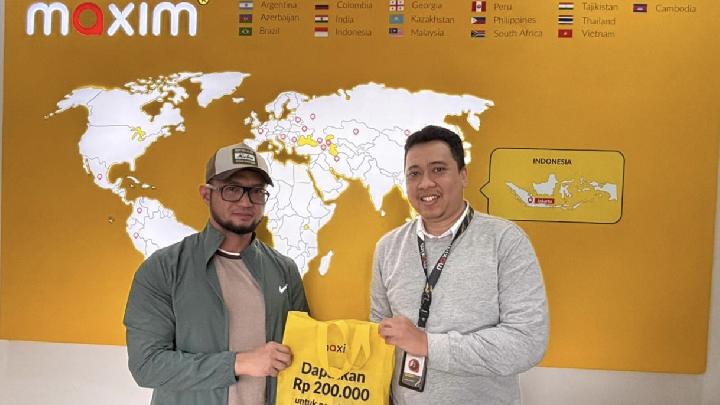
Regarding the health issues mentioned in Prabowo’s speech, we interviewed Charles Honoris, Deputy Chair of Commission IX of the House of Representatives (DPR). We asked him to comment on the government's plans to build hospitals and upgrade community health centers (Puskesmas), as well as issues concerning the supply of doctors and the welfare of healthcare workers. Regarding the economic sector, we drew upon an analysis by Bhima Yudhistira, Executive Director of the Center of Economic and Law Studies, concerning claims about investment and job creation. Meanwhile, Lily Pujiati, Chairperson of the Indonesian Transport Workers Union, provided insights into the income situation of online motorcycle taxi drivers following changes to platform operators' deduction policies.
To examine the "Merah Putih" village cooperative program, this report sought the views of Agus Sarwono, a researcher at Transparency International Indonesia. He offered perspectives on governance risks, potential corruption, and issues surrounding the top-down approach to cooperative development.
Broader issues regarding the state of the nation address were analyzed through an interview with Yance Arizona, a constitutional law lecturer at Universitas Gadjah Mada and the Shadow Cabinet’s Minister of Law and State Policy. He highlighted the government's tendency to showcase positive achievements while omitting issues that remain unresolved challenges.
Regarding the issue of disasters in Sumatra, Feri Amsari, a constitutional law expert from Universitas Andalas, commented on the absence of any evaluation of ecological disasters in the President's speech. Data on the disaster's impact was verified against reports from disaster education organizations, which documented the number of casualties, affected residents, damaged homes, and impacted educational facilities.
In addition to interviews, this report examined data and official statements from ministries and state agencies relevant to the President's claims. For the education digitalization program, for instance, a written statement from the Minister of Basic and Secondary Education, Abdul Mu’ti, issued in November 2025, was used to supplement information on the number of teachers trained and the utilization of digital interactive whiteboards.
Why is it necessary to scrutinize the statements made by President Prabowo in his speech? The state of the nation address serves as a crucial forum for the President to account for the government's performance to the public. Consequently, the figures and claims presented should not be viewed merely as political rhetoric. These claims require verification against data and facts so that the public can determine whether targets have truly been met, remain in progress, or differ significantly from the reality on the ground.
Tempo journalist Novali Panji Nugroho detailed all of this in two main articles titled “Bagaimana Prabowo Memenuhi Target Revitalisasi Sekolah” (How Prabowo Met the School Revitalization Target) and “Klaim Prabowo Vs Data Capaian Kinerja Pemerintahannya” (Prabowo’s Claims vs. Data on His Administration’s Performance).
Read: Palace on Prabowo's Dual Citizenship Proposal: It'll Be Highly Selective
Click here to get the latest news updates from Tempo on Google News






















:strip_icc():format(jpeg)/kly-media-production/medias/5220347/original/094913800_1747281277-41961081_8976420.jpg)



:strip_icc():format(jpeg)/kly-media-production/medias/4576168/original/048568900_1694732112-20230915022441__fpdl.in__medium-shot-woman-posing-with-flowers_23-2150725596_normal.jpg)

:strip_icc():format(jpeg)/kly-media-production/medias/3416144/original/080053900_1617181542-Pare1.jpg)

:strip_icc():format(jpeg)/kly-media-production/medias/5327835/original/090217100_1756190402-Gemini_Generated_Image_14t8d314t8d314t8.jpg)