
TEMPO.CO, Jakarta - Themis Indonesia opposes the idea of regional elections through the Regional House of Representatives (DPRD). According to the researcher and advocate at Themis Indonesia, Kafin Muhammad, the efficiency cited by several parties as a reason for indirect regional elections is questionable.
If the reason is the high cost of regional elections, Kafin explained that practically, the budget for legislative and presidential elections is far more expensive compared to regional elections. For example, the budget for the direct elections in the 2024 synchronous elections reached Rp71 trillion. This budget includes preparations and implementation, such as Rp3.1 trillion for 2022, Rp30 trillion in 2023, and peaked at Rp36.2 trillion in 2024.
This amount is twice as much as the budget for regional elections, which amounts to Rp37.52 trillion for the period 2020-2024. Kafin stated that this budget alone is considered significant due to the allocation for personal protective equipment during the Covid-19 pandemic from 2020 to 2021.
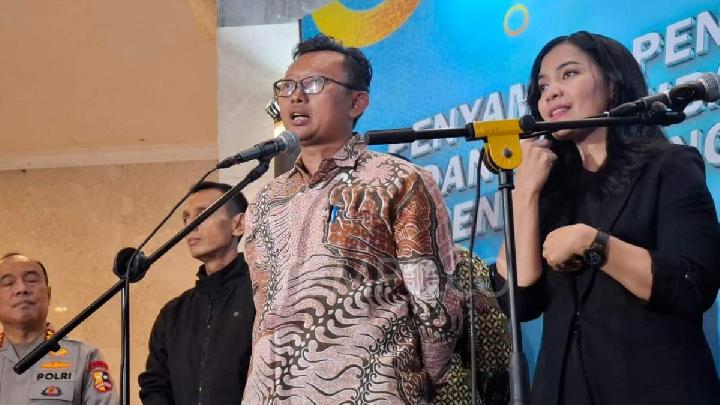
Thus, Themis Indonesia deems the justification of eliminating direct regional elections based on high costs to be inconsistent and selective. "So, it's worth questioning the reasons behind this. It certainly doesn't seem to be for efficiency," he said in a press conference presenting the mini research report "Deceptions of Regional Elections through the DPRD" held virtually on Sunday, January 11, 2026.
On the other hand, the political costs borne by politicians and parties in legislative elections are also substantial. One of the testimonies was provided by House of Representatives (DPR) member Muslim Ayub. The NasDem party politician openly stated that he had spent Rp20 billion to secure a parliamentary seat in the 2024 elections.
According to Irpan, Muslim Ayub's statement indicates that the high cost of direct elections is not solely due to the people implementing direct elections, but rather due to the politicians' and parties' often-deviating behaviors. "This situation arises because the political parties are problematic. Starting from legislative elections, presidential elections, regional elections, and others, they are problematic. So, it's very expensive," he said.
Additionally, the inability of budget users to adhere to efficiency principles contributes to the high cost of regional elections. For example, budget allocations for matters unrelated to regional elections, such as office renovations and the lavish lifestyles of election organizers.
Kafin cited the use of a private jet worth Rp90 billion by the General Election Commission (KPU) in the 2024 Synchronous Elections. "The high cost of the General Elections and regional elections is not because of the direct election system, but because of luxurious lifestyles and budget wastage, including those carried out by election organizers such as the KPU," he said.
Themis Indonesia believes that eliminating direct regional elections for the sake of efficiency also does not make sense, amidst the increasing budget allocations for other programs whose impacts are still questionable. Kafin compared the allocation of Rp237.35 billion by the DPR for legislative functions in 2025, but many of its legislative products were annulled by the Constitutional Court.
Furthermore, Kafin also mentioned the approximately Rp1.1 trillion in DPR allowances, the Nusantara Capital City (IKN) project having spent Rp89 trillion, and the budget for the free nutritious meal (MBG) program reaching hundreds of trillions but causing food poisoning cases.
"The substantial budget for regional elections should not be used as a reason to sacrifice the people's rights. When the budget for the DPR, IKN, or other programs remains substantial despite the questionable results, why are the people's rights to choose their leaders being sacrificed?" he asked.
According to him, if the country is serious about reducing the cost of regional elections, then the behavior of the elites, the lavish lifestyles of organizers, and budget management should be improved. "Instead of curtailing the democratic rights of citizens."
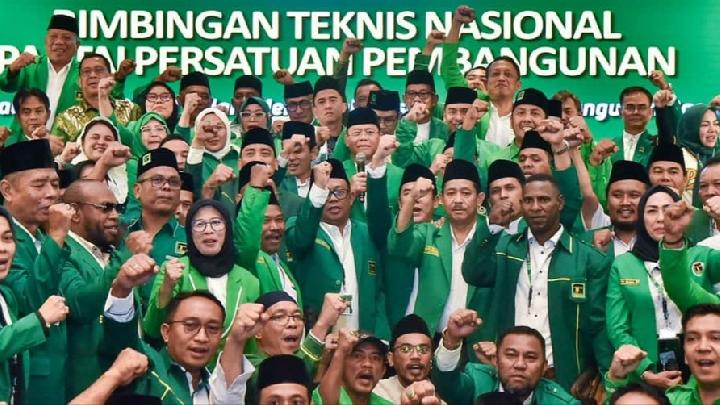
The issue of regional elections through the DPRD has gained prominence ahead of the revision of the General Elections Law. Several parties affiliated with the Coalition of Advancing Indonesia, supporters of President Prabowo Subianto, such as Gerindra, National Awakening Party, and the National Mandate Party, have expressed support for regional elections through the DPRD. The leaders of these political parties were even reported to have met at the residence of Golkar Chair Bahlil Lahadalia on December 28, 2025, to discuss the regional election agenda through the DPRD.
The NasDem party has also declared its support. The Democratic Party followed suit, stating that it would abide by President Prabowo's decision. This shift in the Democratic Party's stance is a change from 2014, when the then-president Susilo Bambang Yudhoyono rejected indirect regional elections and issued a Government Regulation in Lieu of Law (Perpu).
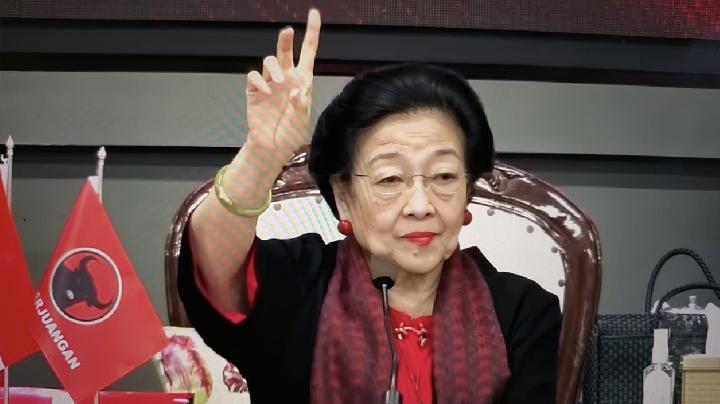
Meanwhile, the Prosperous Justice Party (PKS) remains cautious and will determine its official position in the deliberation of the revision of the Election Law at the DPR. As of now, the Indonesian Democratic Party of Struggle is the only parliamentary party openly against regional elections through the DPRD.
Ervana Trikanaputri contributed to this article
Read: Palace Responds to Survey on Rejection of Indirect Regional Elections
Click here to get the latest news updates from Tempo on Google News


















:strip_icc():format(jpeg)/kly-media-production/medias/4010689/original/086569000_1651202668-pexels-rayn-l-3163677.jpg)

:strip_icc():format(jpeg)/kly-media-production/medias/5154231/original/041919200_1741337635-20250307-Tadarus-ANG_2.jpg)

:strip_icc():format(jpeg)/kly-media-production/medias/3360668/original/038739700_1611729329-abdullah-faraz-fj-p_oVIhYE-unsplash.jpg)





:strip_icc():format(jpeg)/kly-media-production/medias/4770150/original/051663000_1710247846-20240312-Berbuka_Puasa_di_Istiqlal-HER_2.jpg)

:strip_icc():format(jpeg)/kly-media-production/medias/3190057/original/069392400_1595662626-muslim-woman-praying_23-2147794180.jpg)

:strip_icc():format(jpeg)/kly-media-production/medias/5450827/original/035534900_1766196455-berdoa_di_pagi_hari.jpg)

:strip_icc():format(jpeg)/kly-media-production/medias/4365380/original/015029600_1679307616-mandi_wajib-junub-keramas-heleno-kaizer-unsplash.jpg)
:strip_icc():format(jpeg)/kly-media-production/medias/5306131/original/030623000_1754376969-pexels-sarah-chai-7262986.jpg)