
December 7, 2025 | 11:28 am

By Yulida Nuraini Santoso, Universitas Gadjah Mada, Indonesia.
With tensions between Tokyo and Beijing rising, ASEAN and Taiwan must balance economic integration with the political realities imposed by China’s growing assertiveness.
Tensions between China and Japan, which escalated after a recent statement on Taiwan by new Japanese Prime Minister Sanae Takaichi, continue to shape geopolitics in East and Southeast Asia. US President Donald Trump has reportedly intervened in the matter, speaking to Chinese premier Xi Jinping and Takaichi to cool temperatures.
The American policy of strategic ambiguity surrounding Taiwan, which it has followed since the 1970s, has enabled economic ties between the US and China to flourish. Like the US, the Association of South East Asian Nations (ASEAN), Taiwan’s nearest regional grouping, does not take any clear stance in navigating the One China policy.
Although Taiwan and ASEAN don’t share formal diplomatic relations, ASEAN is one of the largest convening powers in the region. Meanwhile, Taiwan’s semiconductor industry is a globally dominant economic asset. As the world faces issues that are more interlinked and complex, it is critical to understand where ASEAN and Taiwan’s interests align and where they diverge.
Economic convergence of interests
The world has become increasingly reliant on Taiwan’s semiconductor industry. Taiwan accounts for over 60 percent of global semiconductor production and supplies more than 90 percent of the most advanced logic chips. The island’s firms — above all its powerhouse, Taiwan Semiconductor Manufacturing Co Ltd (TSMC) — are central to that capability. TSMC itself is estimated to account for around 8 percent of Taiwan’s overall economic output and roughly 12 percent of its exports.
With policies carefully designed to support manufacturing industries, Taiwan has enjoyed significant economic advancement over the years and has made the semiconductor industry its global identity and strength. But what does this strength mean for its relationship with ASEAN?
There is a wide range of literature examining Taiwan’s fraught relationship with Beijing and delicate ties with Washington.
ASEAN can play a key role in easing tensions between these countries.
As it is not a security pact, ASEAN’s regional economic cooperation has become a pivotal strategy to avoid conflict. Past ASEAN leaders, including Indonesia’s Joko Widodo and Singapore’s Lee Hsien Loong, have noted how an interconnected economy is key to instilling greater stability in the region.
Taiwan, which shares a similar global outlook through its New Southbound Policy (NSP) aimed at countries in South and Southeast Asia along with Australia and New Zealand, views shared economic stakes as providing solid grounds for mechanisms of tension de-escalation. Both the ASEAN Outlook on the Indo-Pacific and the NSP underscore the importance of economic cooperation and diversification of partnerships.
ASEAN has formal dialogue partnerships with eleven countries, but should not be easily satisfied with this number. There is an urgent need to diversify its relationships to include non-formal partners that play a critical part in its regional economy.
It is also an important market for Taiwan. ASEAN collectively accounts for a substantial share — estimated at close to 20 percent – of Taiwan’s exports, making the bloc one of Taiwan’s largest markets.
Democracy and political divergence
To forge a deeper strategic partnership, ASEAN and Taiwan will require politically willing governments able to navigate their relationships with China skilfully while building stronger economic cooperation frameworks. The outcome of such engagement should extend beyond economic gains, fostering resilience capable of easing tensions, preventing conflict and reducing global polarisation.
However, the region’s current political landscape is not fully aligned with Taiwan’s democratic trajectory.
In his recent address titled “Chip in with Taiwan”, Taiwanese Minister of Foreign Affairs Lin Chia-lung highlighted Taiwan’s determination to defend democratic values by strengthening partnerships with other democracies facing uncertain geopolitical risks. This includes resisting authoritarian influence, promoting human rights, advancing digital governance and upholding the rules-based international order.
This sentiment reflects a point of divergence between Taiwan and ASEAN.
Although democracy is part of the political make-up of most ASEAN states, its current form in several countries is far from ideal. Key democratic actors in ASEAN, including Indonesia and Malaysia, face shifting domestic dynamics that highlight the decline of democracy in these countries. Indonesia has seen larger and more frequent waves of protest after President Prabowo Subianto took office in late 2024 — protests that reflect grievances about economic policy, inequality and governance and that have continued into 2025.
Malaysia’s 2020 “Sheraton Move” precipitated the collapse of the Pakatan Harapan government and triggered a period of political instability.
A recent Topline Report by the Philippine Observatory on Democracy notes divisive debates in the Philippines, including tensions over political dynasties, civic participation and disinformation.
Democracy remains a stated priority in ASEAN’s engagement with its partners. The addition of Timor-Leste, ASEAN’s newest member, as a “free” country in the Freedom House ranking for 2024 is a notable development, but it does little to balance ASEAN’s mixed political composition of authoritarian, hybrid and electorally free systems.
While both Taiwan and ASEAN share the desire for prosperity as a path to regional stability in a polarised global environment, there are also fundamental differences to be aware of. The divergence outlined here is as a reminder that pragmatic engagements aimed at complementing diverse partnerships are an option worth exploring.
Originally published under Creative Commons by 360info™.
*) DISCLAIMER
Articles published in the “Your Views & Stories” section of en.tempo.co website are personal opinions written by third parties, and cannot be related or attributed to en.tempo.co’s official stance.
UK Assists Timor Leste's Transition Toward ASEAN Membership
14 hari lalu
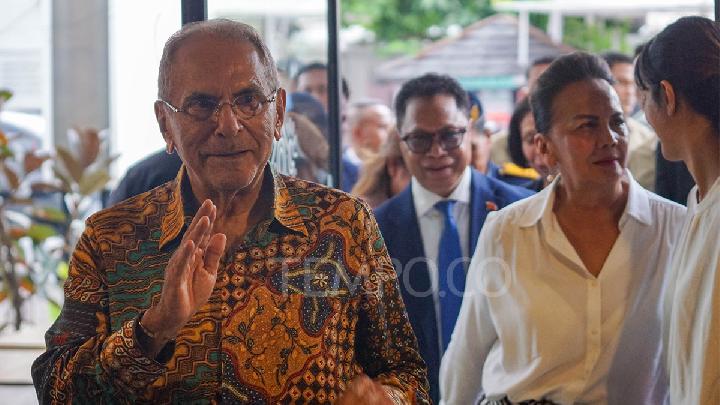
The UK expresses its full support for Timor-Leste as the newest member of ASEAN through assistance in the fields of education, economy, and trade.
British Ambassador Announces Plans to Combat Scam Centers in ASEAN
15 hari lalu

The UK government is committed to supporting ASEAN in addressing online scams and the proliferation of digital criminal activities in the region.
UK Prioritizes Clean Energy and Multilateralism in Its ASEAN Agenda
15 hari lalu

The UK reaffirms its commitment to strengthening cooperation with ASEAN through energy transition, intercommunity relations, and regional security.
Today's Top 3 News: Indonesia Sees Rise in Creative Economy Workers, Reaching 27.4mn in 2025
18 hari lalu

Here is the list of the top 3 news on Tempo English today.
Sugar-Sweetened Beverage Tax in ASEAN: When Will Indonesia Join?
19 hari lalu
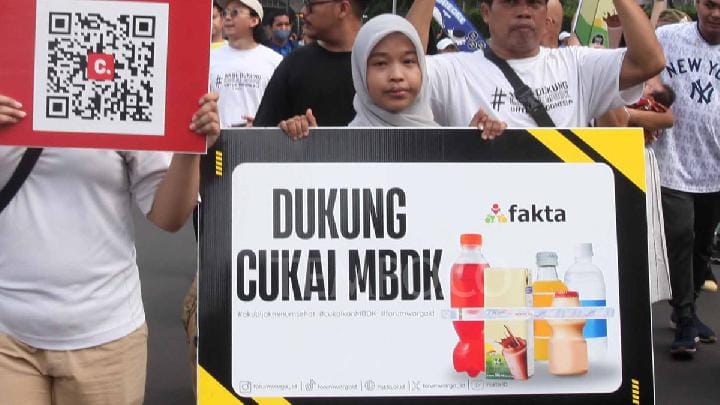
The seven ASEAN countries with an SSB tax are Cambodia, Laos, Brunei, Thailand, the Philippines, Malaysia, and Timor Leste.
Safe, Clean, Sustainable: Is ASEAN's New Declaration Enough?
20 hari lalu
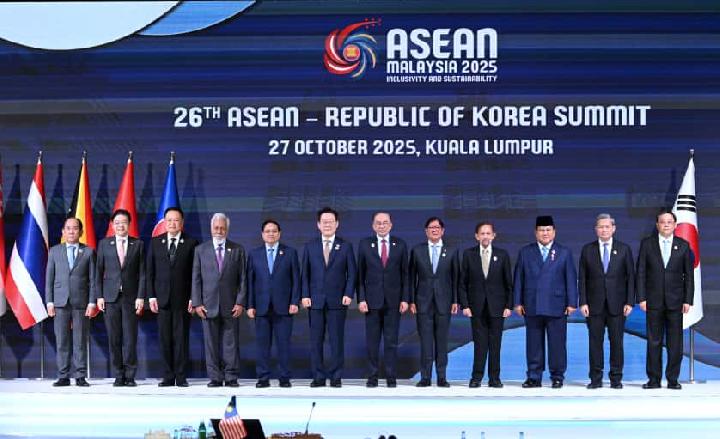
The new ASEAN Declaration on Safe, Clean, Healthy, & Sustainable Environment is a critical 1st step that compels member states to move beyond rhetoric
Indonesia Leads ASEAN Carbon Market Strategy at COP 30 Climate Summit
21 hari lalu
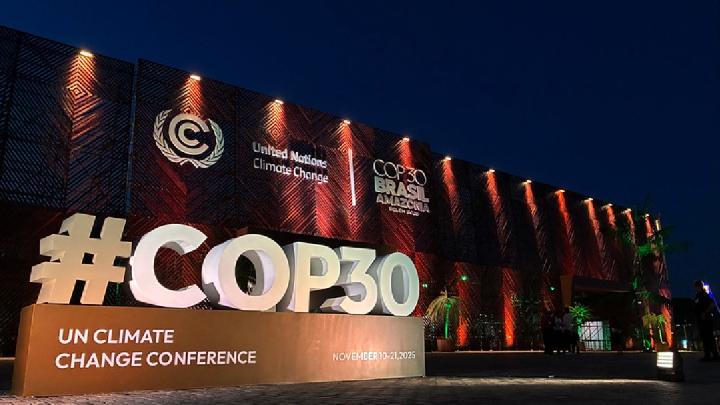
At COP 30, Indonesia introduced a climate diplomacy innovation titled "Carbon Connection for Climate Action."
Malaysia Offers to Host Peace Talks between Thailand and Cambodia
22 hari lalu
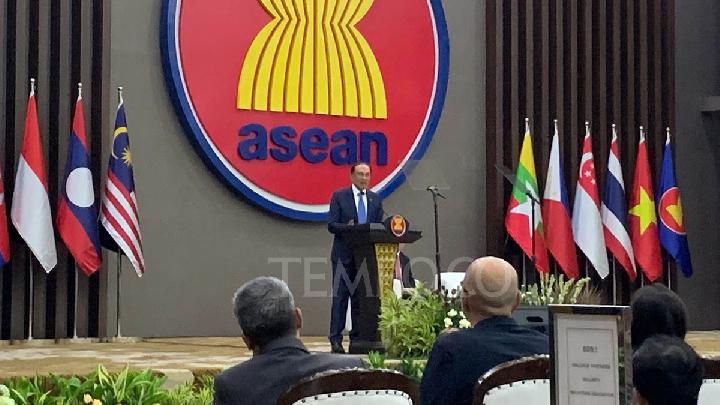
Malaysia has expressed readiness to host new peace talks between Thailand and Cambodia to ease escalating tensions at their border.
Indonesia Undecided on Sending Observers to Myanmar Election
31 hari lalu
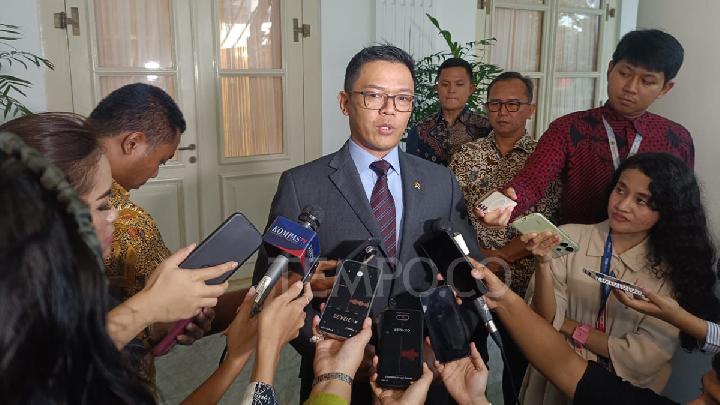
Foreign Minister Sugiono stated that Indonesia is still considering the decision to send a monitoring team to the upcoming general election in Myanmar.
CSIS Criticizes Prabowo for Lack of Participation in ASEAN Summit
31 hari lalu

The Center for Strategic and International Studies (CSIS) Indonesia criticizes President Prabowo Subianto's lack of participation in the ASEAN Summit.
























:strip_icc():format(jpeg)/kly-media-production/medias/4010689/original/086569000_1651202668-pexels-rayn-l-3163677.jpg)
:strip_icc():format(jpeg)/kly-media-production/medias/5428698/original/015580400_1764559226-Kalender_HIjriah_Desember_2025.JPG)







:strip_icc():format(jpeg)/kly-media-production/medias/2855596/original/055794600_1563344847-iStock-1134972492.jpg)
:strip_icc():format(jpeg)/kly-media-production/medias/5424037/original/048660500_1764130779-sholawat_ujang_bustomi.png)
:strip_icc():format(jpeg)/kly-media-production/medias/1626268/original/067647800_1497616352-Mantan-MenKes-Siti-Fadilah-Divonis-4-Tahun-Penjara-01.jpg)
:strip_icc():format(jpeg)/kly-media-production/medias/4990655/original/018003600_1730716747-tata-cara-sholat-tahajud-agar-keinginan-terkabul.jpg)
:strip_icc():format(jpeg)/kly-media-production/medias/5376360/original/049261700_1760001962-Ilustrasi_berdoa.jpg)