
August 24, 2026 | 05:25 pm

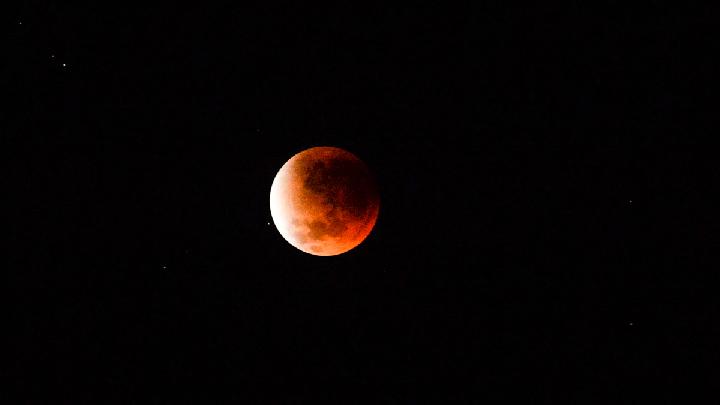
TEMPO.CO, Jakarta - Yet another lunar phenomenon will grace the sky this month as a deep partial lunar eclipse turns the full Sturgeon Moon a striking copper-red hue. Visible across North and South America, the event will unfold overnight on August 27 into the early morning of August 28, 2026.
This marks the first lunar eclipse visible from the region since September 2024, arriving just two weeks after the August 12 solar eclipse.
What Is the "Copper" Lunar Eclipse?
The upcoming event is a deep partial lunar eclipse occurring during the full Sturgeon Moon. Unlike a total lunar eclipse, which is often called a Blood Moon, where the entire moon is submerged in Earth's central shadow, a partial eclipse leaves a section illuminated.
At peak coverage, Earth's shadow will cover between 93 and 96 percent of the moon's surface, according to reports from Discover Magazine. The moon will take on a reddish tint due to Rayleigh scattering. CBS8 reported via NASA that Earth's atmosphere filters out shorter blue light wavelengths while bending longer red wavelengths onto the lunar surface. Smoke from summer wildfires or atmospheric dust can make the red shade appear even deeper.
Which Regions Can See the Copper Moon?
The eclipse will be visible across North and South America, alongside parts of Europe and western Africa. According to data cited by USA Today, roughly 987 million people across the Americas, or about 12 percent of the global population, will be able to view all phases, weather permitting.
When Will the Lunar Eclipse Peak?
The eclipse will span a total duration of 5 hours and 38 minutes, with the darkest umbral phase lasting 3 hours and 18 minutes, according to USA Today.
According to NASA data, the central timeline unfolds as follows:
- 8:24 p.m. CT (August 27): Penumbra entry as the moon enters Earth's faint outer shadow.
- 9:34 p.m. CT: Umbra entry as the moon enters the dark central shadow.
- 11:13 p.m. CT: Maximum eclipse peak as the moon reaches its deepest coverage.
- 12:52 a.m. CT (August 28): Umbra exit as the dark partial phase ends.
- 2:02 a.m. CT: Penumbra exit as the eclipse officially concludes.
Where and How to See the Lunar Eclipse
For observers in the United States, watching the eclipse requires no protective eyewear. Unlike solar eclipses, NASA confirms that lunar eclipses are completely safe to view with the naked eye.
Stargazers can catch the phenomenon simply by heading outdoors to an open area with low light pollution and clear skies. While no tools are necessary, binoculars, small telescopes, or camera lenses can provide an enhanced view of Earth’s curved shadow as it sweeps across the lunar surface.
In western parts of the US, the moon will sit lower near the horizon during the early penumbral stage, but the peak red hue will be visible across most of the nation.
According to NASA records, this week's Copper Lunar Eclipse marks the deepest pass through Earth's shadow until the next total lunar eclipse arrives on December 31, 2028.
Read: Here's Everything to Know About August's Lunar Eclipse
Click here to get the latest news updates from Tempo on Google News
Here's Everything to Know About August's Lunar Eclipse
4 hari lalu
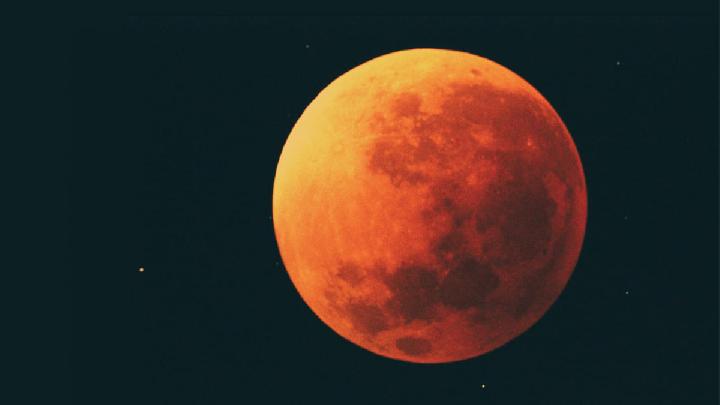
Just two weeks after the total solar eclipse, millions in North America, Europe, and more will see another celestial extravaganza: the lunar eclipse.
August 'Almost Blood Moon': When and Where to See It in the US
24 hari lalu

An "almost blood moon" will light up US skies in late August 2026 as a deep partial lunar eclipse coincides with the full moon.
Look Up! Blue Moon to Illuminate This Week's Sky Across U.S.
25 Mei 2026

Stargazers are in for a treat as the month is ending with a second full moon appearing as both a blue moon and a micromoon.
Total Lunar Eclipse Singapore Tonight: Venus-Saturn Conjunction to Follow
3 Maret 2026
Tonight's total lunar eclipse over Singapore will paint the sky deep crimson, enhanced by the Venus-Saturn conjunction.
Early Phase of Total Lunar Eclipse Visible in West Java
3 Maret 2026
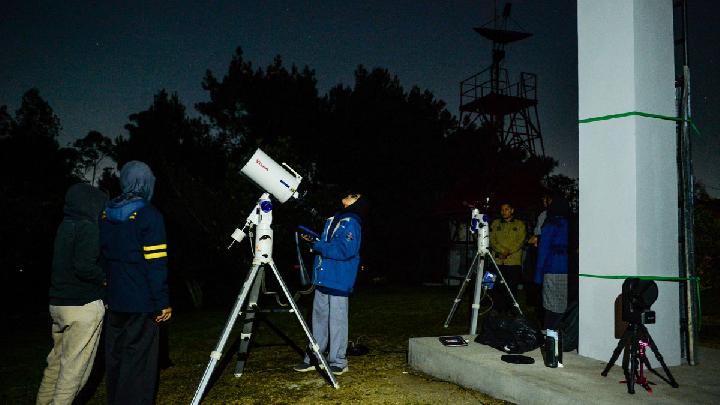
Not all phases of the total lunar eclipse on March 3, 2026, will be observable in Indonesia.
9 Exciting Night Sky Events in March 2026
2 Maret 2026
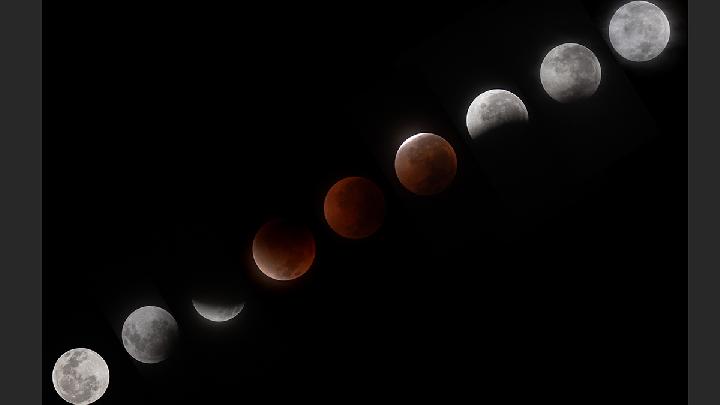
Stargazers are treated all month, with the wonderful cosmic sights of must-see night sky events in March 2026. Find the details of each event here.
Indonesia's Bosscha to Observe and Live Stream Total Lunar Eclipse
2 Maret 2026
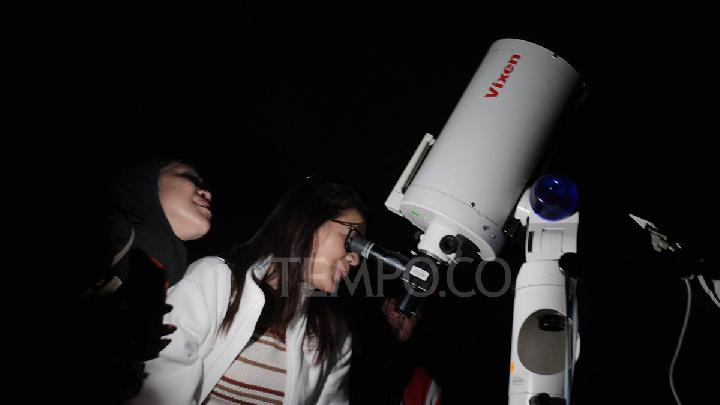
The Bosscha Observatory is preparing to observe a total lunar eclipse on Tuesday, March 3, 2026, from Lembang, West Bandung, Indonesia.
Total Lunar Eclipse in March: Science Centre Singapore Hosts Free Viewing
12 Februari 2026
On March 3, a rare total lunar eclipse will unfold over Singapore's skies, and Science Centre Singapore will host a free viewing session.
Four Eclipses to Occur in 2026, Only One Seen from Indonesia
7 Januari 2026

The first eclipse will be a solar eclipse on February 17th, coinciding with the celebration of Chinese New Year.
List of 2026 Lunar Events: 13 Full Moons, Supermoons, and Eclipses
2 Januari 2026
The 2026 night sky will be graced by 13 full moons, featuring 3 supermoons, a rare Blue Moon, and two lunar eclipses, one of which will be Blood Moon.



























:strip_icc():format(jpeg)/kly-media-production/medias/5220347/original/094913800_1747281277-41961081_8976420.jpg)
:strip_icc():format(jpeg)/kly-media-production/medias/5582904/original/095301300_1778131421-cpns_bea_cukai_-_cek_fakta.jpg)
:strip_icc():format(jpeg)/kly-media-production/medias/4576168/original/048568900_1694732112-20230915022441__fpdl.in__medium-shot-woman-posing-with-flowers_23-2150725596_normal.jpg)
:strip_icc():format(jpeg)/kly-media-production/medias/5525602/original/003097400_1773046669-unnamed__54_.jpg)
:strip_icc():format(jpeg)/kly-media-production/medias/5572218/original/060707400_1777780612-cek_fakta_-_CPNS_Kemenag.jpg)
:strip_icc():format(jpeg)/kly-media-production/medias/4442582/original/000568400_1685093803-Screenshot_20230526_120852_Gallery.jpg)
:strip_icc():format(jpeg)/kly-media-production/medias/5407521/original/093009600_1762744968-Cek_Fakta_Tidak_Benar_Ini_Link_Pendaftaran_-_2025-11-10T101330.228.jpg)
:strip_icc():format(jpeg)/kly-media-production/medias/5580670/original/061045400_1778126140-8a6419d8-418c-4e77-8846-31d68f6b6e38.jpg)
:strip_icc():format(jpeg)/kly-media-production/medias/4439341/original/074219600_1684915362-ibrahim-uz-3Z3RvzpVAqM-unsplash.jpg)
:strip_icc():format(jpeg)/kly-media-production/medias/5380783/original/022608800_1760432989-Ilustrasi_Qunut.jpg)
:strip_icc():format(jpeg)/kly-media-production/medias/5382328/original/091326000_1760578848-Cek_Fakta_Tidak_Benar_Ini_Link_Pendaftaran_-_2025-10-15T134632.180.jpg)
:strip_icc():format(jpeg)/kly-media-production/medias/5550896/original/089873500_1775711382-Cek_Fakta_Tidak_Benar_Ini_Link_Pendaftaran_-_2026-04-09T120454.556.jpg)
:strip_icc():format(jpeg)/kly-media-production/medias/4015150/original/070691700_1651836959-UMROH_BACKPAKER_3.jpg)
:strip_icc():format(jpeg)/kly-media-production/medias/3187033/original/003171100_1595400533-makkah-kaaba-hajj-muslims_21730-6508.jpg)
:strip_icc():format(jpeg)/kly-media-production/medias/2806807/original/084266200_1557976563-IMG-20190507-WA0082.jpg)

:strip_icc():format(jpeg)/kly-media-production/medias/4697748/original/031327300_1703490526-20231225-Taman-Margasatwa-Ragunan-Herman-5.jpg)
:strip_icc():format(jpeg)/kly-media-production/medias/4020490/original/041535400_1652339052-20220512-Aksi-Buruh-Peringati-Mayday-7.jpg)
:strip_icc():format(jpeg)/kly-media-production/medias/3081754/original/022995900_1584692954-20200320-Suasana-Salat-Jumat-di--Masjid-Agung-Al-Azhar-Jakarta-1.jpg)