
TEMPO.CO, Jakarta - On August 12, an Indonesian frigate briefly joined a naval exercise with China's People's Liberation Army Navy (PLAN) in waters off Taiwan's east coast, with Taipei asking Jakarta for a reason why it joined the drill.
Indonesian Navy frigate KRI I Gusti Ngurah Rai joined the PLAN guided-missile frigate Honghe for what Jakarta described as a "passing exercise." The maneuvers took place during Taiwan's annual Han Kuang military drill.
An Indonesian Ministry of Foreign Affairs spokesperson said they were fully aware that the exercise's location "made it particularly sensitive," but stressed that its vessel's presence "was simply part of its transit route back to Indonesia." According to the Taipei Times, the Indonesian vessel was returning from Vladivostok, Russia after an exercise with the Russian navy.
Taiwan's Mainland Affairs Council condemned Beijing's "provocation" after China announced the drill on August 11. Taipei also requested "further details from the Indonesian government" from its Ministry of Foreign Affairs.
Beijing considers Taiwan to be Chinese territory and has vowed to "reunite" the self-ruled island with the mainland, by using force if necessary. The People's Liberation Army has ratcheted up pressure on Taiwan with frequent military exercises around the island, especially since former US House Speaker Nancy Pelosi visited Taipei in 2022.
Amid reactions from Taipei and Washington, the Indonesian Navy stated that its activities with the Chinese Navy were "not warfighting activities in nature" and "not intended as combat training."
Ying-Yu Lin, an associate professor at Taiwan's Tamkang University Graduate Institute of International Affairs and Strategic Studies, told DW that the Chinese exercise with Indonesia had little tactical significance.
"It wasn't as practical as a joint maritime drill, but China wanted to claim its capability in the waters," he said.
Indonesia dragged into sensitive geopolitics
However, Ratih Kabinawa, a visiting research fellow at the Japan Institute of International Affairs focusing on Taiwan-Indonesia ties, told DW that regardless of the significance of the drills, Indonesia should have expected some reaction from Taiwan.
"Like it or not, Indonesia is now dragged into this kind of geopolitical gambit," she said.
Kabinawa added that passing exercises were among the lowest-level naval activities yet used by China to justify its intimidation of Taiwan.
"Indonesia must also exercise caution in this regard," she said, adding that Jakarta should "not to be too naive," to assume that its participation in a "regular exercise" with China would not cause concern in Taiwan.
Jakarta's nonaligned foreign policy in focus
Indonesia has stood by its "free and active" foreign policy for over half a century, distinguishing itself from neighboring countries that align with China or the US. However, both Beijing and Washington want the world's largest island nation to be part of their Asia-Pacific strategy.
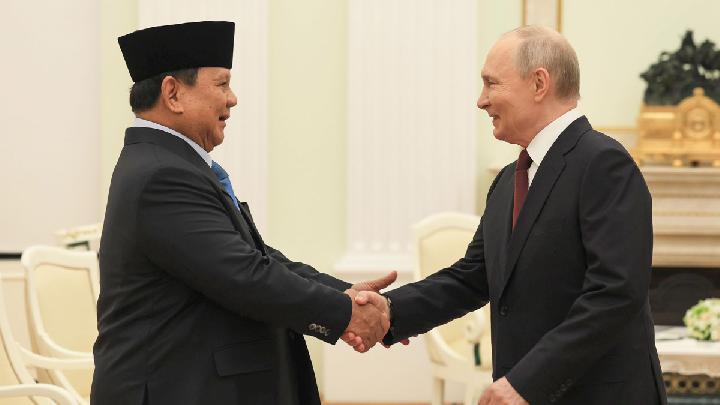
Indonesian President Prabowo Subianto met with Elbridge Colby, a US undersecretary of defense, in Jakarta on the same day as the controversial passing exercise with China.
While Prabowo also visits Chinese President Xi Jinping in Beijing, Jakarta has shown its willingness to accept US requests for blanket overflights, which allows US military aircraft access to Indonesian airspace.
Chong Ja Ian, an associate professor of political science at the National University of Singapore, told DW that Indonesia's neutral stance is a product of pressure from superpowers.
"The principle of free and active foreign policy wouldn't change much, but we'll wait and see how Jakarta operates it," he said.
Researcher Kabinawa said the current Indonesian administration lacks clear guidelines for interpreting its foreign policy amid intensifying geopolitical tension, especially across the Taiwan Strait.
However, she added that it would be unlikely for Indonesia to be involved in any Chinese invasion scenario of Taiwan.
"I would always remind everyone that there are 350,000 Indonesian citizens in Taiwan who need to be protected or maybe evacuated if that hypothetical scenario happens," she said.
According to Taiwan's official data, Indonesians are the largest group of foreign residents in the country.
"So I don't think Indonesia would get involved in being a combatant, but rather involved in trying to evacuate their citizens,” Kabinawa said. "That would risk the political and economic stability of the country [Indonesia] itself.”
Iryanda Mardanuz in Jakarta contributed to this article.
Read: Indonesia Says Naval Exercise With China Near Taiwan Was Routine Diplomacy
Click here to get the latest news updates from Tempo on Google News






















:strip_icc():format(jpeg)/kly-media-production/medias/5220347/original/094913800_1747281277-41961081_8976420.jpg)





:strip_icc():format(jpeg)/kly-media-production/medias/4576168/original/048568900_1694732112-20230915022441__fpdl.in__medium-shot-woman-posing-with-flowers_23-2150725596_normal.jpg)

:strip_icc():format(jpeg)/kly-media-production/medias/3416144/original/080053900_1617181542-Pare1.jpg)

:strip_icc():format(jpeg)/kly-media-production/medias/5327835/original/090217100_1756190402-Gemini_Generated_Image_14t8d314t8d314t8.jpg)

:strip_icc():format(jpeg)/kly-media-production/medias/4030425/original/064674000_1653273891-raka-dwi-wicaksana-Jbk_Tce8Z1U-unsplash.jpg)
:strip_icc():format(jpeg)/kly-media-production/medias/5502010/original/090952200_1770965006-tiktok_korlantas_klaim.jpg)