
September 7, 2026 | 08:16 pm

TEMPO.CO, Jakarta - The waning crescent Moon is visible in the early morning sky this week, from September 7 through September 10, 2026, as the Moon approaches the end of its monthly cycle.
The Moon is gradually becoming thinner after passing the Third Quarter phase on September 4. It will continue to lose its illuminated portion until reaching the New Moon phase late Thursday, September 10, at 11:27 p.m. EDT in the United States.
The waning crescent is more than a familiar curved shape in the sky. Its changing appearance offers a visible look at how the Moon moves through its roughly 29.5-day cycle.
What Is a Waning Crescent Moon?
The waning crescent is the final phase of the Moon before the New Moon. It begins after the Third Quarter and lasts until the Moon becomes completely unilluminated from Earth's perspective.
During this phase, the visible illuminated portion shrinks from about 50 percent toward zero. The term “waning” refers to the decreasing illumination, while “crescent” describes the Moon's thin, curved shape.
Unlike the Full Moon, which is visible for much of the night, the waning crescent is primarily a morning Moon. It generally rises after midnight and can remain visible into the morning before setting in the afternoon.
When Can You See the Waning Crescent Moon?
For skywatchers in the United States, the waning crescent is visible during the early morning hours from September 7 through September 10, weather permitting.
Look toward the eastern sky before sunrise. The Moon will appear increasingly thin as it moves closer to the Sun in the sky. Because its rising and setting times vary by location, the exact viewing window will differ between U.S. cities.
On September 8, the crescent Moon will also appear close to Jupiter, creating a notable pairing in the early morning sky.
The best viewing conditions generally occur before sunrise, when the sky is still dark enough to make the increasingly faint crescent easier to see.
Why Does the Moon Get Thinner?
The Moon appears to shrink during the waning crescent phase because of its changing position relative to Earth and the Sun.
Half of the Moon remains illuminated by sunlight, but from Earth, we gradually see less of that sunlit half as the Moon moves toward the New Moon.
By the final days of the phase, only a narrow sliver is illuminated. At the New Moon, the side of the Moon facing Earth is largely unlit, making it difficult to see.
The September New Moon occurs at 11:27 p.m. EDT on September 10, according to astronomical calculations. Because of time-zone differences, it falls on September 11 in parts of the world.
What Is Earthshine?
A thin waning crescent can sometimes reveal another striking feature: earthshine.
Even when only a small crescent is brightly illuminated, the rest of the Moon's disk may appear faintly visible. This happens when sunlight reflected from Earth illuminates the darker portion of the Moon.
The effect is sometimes called the Da Vinci glow. It is easiest to notice when the crescent is very thin and the sky is still relatively dark.
Why Can the Crescent Look Different?
The Moon is in the same phase worldwide at any given moment. The percentage of its surface illuminated by the Sun does not change depending on where someone is observing it.
However, the orientation of the crescent can look different.
The curve may appear tilted differently depending on the observer's latitude, the time of day and the Moon's position in the sky. This is why the crescent can appear to have a different orientation to observers in the Northern and Southern hemispheres.
The boundary separating the Moon's illuminated and dark portions is called the terminator.
What Comes After the Waning Crescent?
The waning crescent is the final visible phase before the New Moon, after which the lunar cycle begins again.
The sequence moves from the New Moon to the waxing crescent, First Quarter, waxing gibbous and Full Moon. The illuminated portion then decreases through the waning gibbous phase, Third Quarter and finally the waning crescent.
After the New Moon, a thin waxing crescent Moon will gradually become visible again in the evening sky.
For skywatchers, following the Moon across several days offers a simple way to observe this cycle in real time, from a broad half-lit disk after the Third Quarter to a slender crescent just before the Moon disappears from view.
Venus to Vanish Behind Moon on Sept. 14: What to Know
5 hari lalu

A rare lunar occultation of Venus will occur on September 14, 2026, visible from limited regions in Indonesia.
Countries Move Toward Establishing a Lunar Standard Time
8 hari lalu
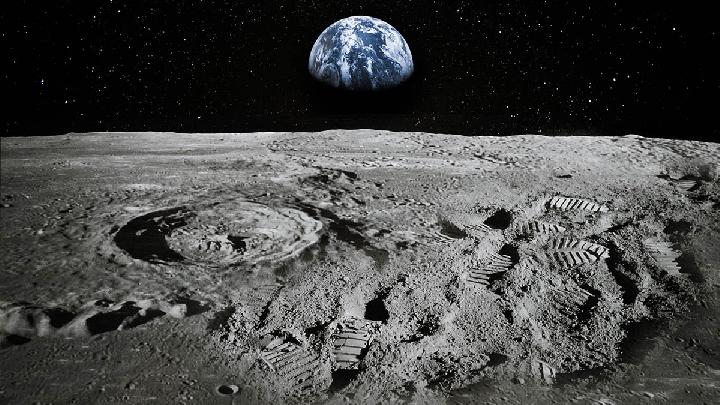
Countries are preparing to establish a unified lunar time standard at a Paris conference amid a global race to build a Moon station.
UK to See Blood Moon as Partial Lunar Eclipse Peaks on August 28
12 hari lalu
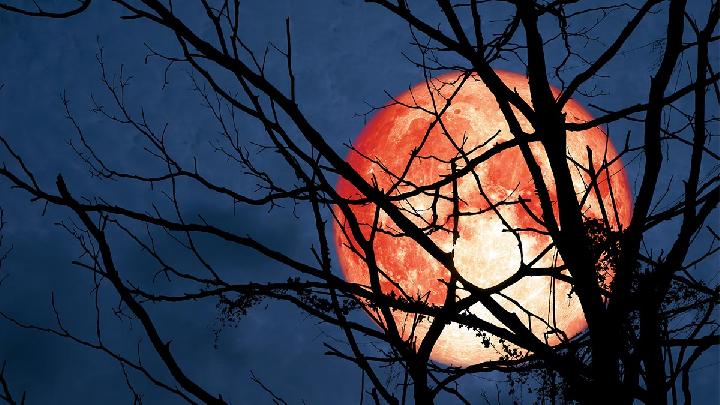
UK skywatchers could see a Blood Moon on August 28 as a partial lunar eclipse turns up to 90% of the Moon reddish.
How to Spot the Copper Lunar Eclipse in the US This Week
14 hari lalu

A deep partial lunar eclipse will turn the full Sturgeon Moon a rusty red hue across the US on August 27, 2026. Here is what to know.
Here's Everything to Know About August's Lunar Eclipse
18 hari lalu
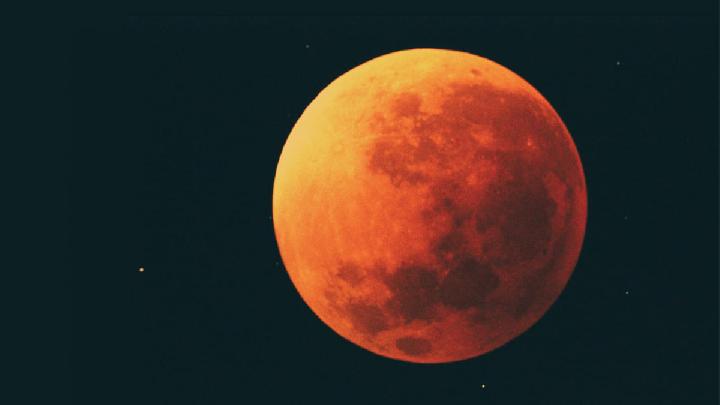
Just two weeks after the total solar eclipse, millions in North America, Europe, and more will see another celestial extravaganza: the lunar eclipse.
NASA Invites India to Join Lunar Base Program
20 hari lalu

NASA has invited India to join a project for a base near the Moon's south pole.
Solar Eclipse: What to Look Forward To
26 hari lalu

The last solar eclipse visible from the European mainland was in 1999. Here's what to expect, and how to prepare for this rare occasion.
UK to See Best Solar Eclipse Since 1999 as Moon Covers Up to 96% of Sun
26 hari lalu

he UK will witness its best solar eclipse since 1999, while northern Spain gets totality. Here's when and how to watch the event safely.
A Complete Guide to See Solar Eclipse in London This Wednesday
28 hari lalu

London will witness a rare and spectacular partial solar eclipse on Wednesday, August 12, 2026. Here's an all-encompassing guide to see it.
How SpaceX's Moon Impact Could Advance Lunar Science
32 hari lalu
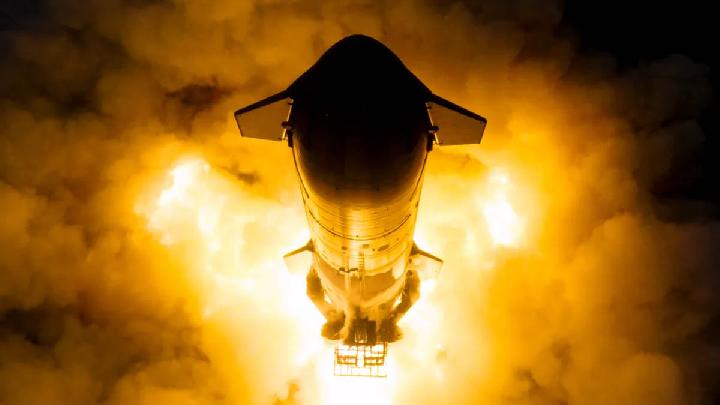
A stray SpaceX rocket struck the Moon, giving scientists a rare chance to study lunar impacts and improve future Moon missions.





















:strip_icc():format(jpeg)/kly-media-production/medias/5220347/original/094913800_1747281277-41961081_8976420.jpg)


:strip_icc():format(jpeg)/kly-media-production/medias/5380783/original/022608800_1760432989-Ilustrasi_Qunut.jpg)
:strip_icc():format(jpeg)/kly-media-production/medias/5382328/original/091326000_1760578848-Cek_Fakta_Tidak_Benar_Ini_Link_Pendaftaran_-_2025-10-15T134632.180.jpg)
:strip_icc():format(jpeg)/kly-media-production/medias/5550896/original/089873500_1775711382-Cek_Fakta_Tidak_Benar_Ini_Link_Pendaftaran_-_2026-04-09T120454.556.jpg)
:strip_icc():format(jpeg)/kly-media-production/medias/2806807/original/084266200_1557976563-IMG-20190507-WA0082.jpg)
:strip_icc():format(jpeg)/kly-media-production/medias/5640995/original/044596400_1778245881-haj1.jpg)
:strip_icc():format(jpeg)/kly-media-production/medias/6363680/original/024922800_1779238711-Tugas__15_.jpg)
:strip_icc():format(jpeg)/kly-media-production/medias/4725886/original/008571900_1706156981-madrosah-sunnah-XvJYidRmpUE-unsplash.jpg)
:strip_icc():format(jpeg)/kly-media-production/medias/1336024/original/066771100_1472887334-20160903-Idul-Adha-Jakarta-Qurban-YR3.jpg)
:strip_icc():format(jpeg)/kly-media-production/medias/4081826/original/095015200_1657181935-eid-al-adha-g4b5ad3a7d_1920.jpg)
:strip_icc():format(jpeg)/kly-media-production/medias/5215229/original/033266000_1746799361-4ff83da7-1538-4742-9157-6cfce7cd7661.jpg)
:strip_icc():format(jpeg)/kly-media-production/medias/1336023/original/016338800_1472887334-20160903-Idul-Adha-Jakarta-Qurban-YR2.jpg)
:strip_icc():format(jpeg)/kly-media-production/medias/4864490/original/019606900_1718432505-Khusyuk_Wukuf_Jemaah_Haji_di_Padang_Arafah-AP__6_.jpg)
:strip_icc():format(jpeg)/kly-media-production/medias/3081754/original/022995900_1584692954-20200320-Suasana-Salat-Jumat-di--Masjid-Agung-Al-Azhar-Jakarta-1.jpg)
:strip_icc():format(jpeg)/kly-media-production/medias/5575202/original/003079900_1778040737-WhatsApp_Image_2026-05-06_at_10.48.40_AM.jpeg)
:strip_icc():format(jpeg)/kly-media-production/medias/4003293/original/062384100_1650614701-ibrahim-uz-3Z3RvzpVAqM-unsplash.jpg)
:strip_icc():format(jpeg)/kly-media-production/medias/2336374/original/082096200_1534823979-Salat-Idul-Adha-1439-H5.jpg)
:strip_icc():format(jpeg)/kly-media-production/medias/5531067/original/095633800_1773546706-Klaim_bantuan_dari_Purbaya.jpg)