
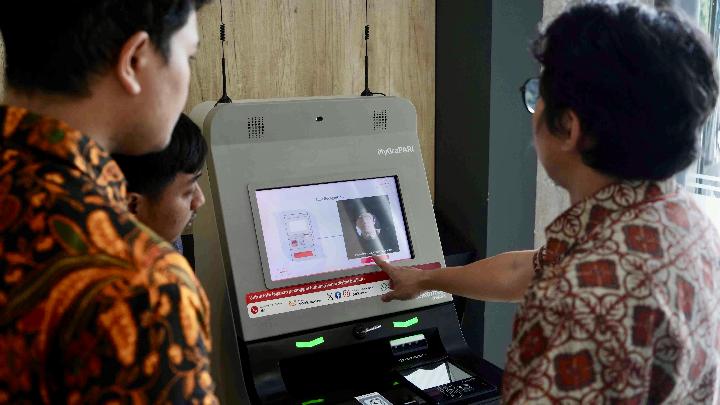
TEMPO.CO, Jakarta – Indonesia will require facial-recognition-based biometric registration for all new mobile phone numbers starting July 1, 2026, as the government seeks to combat digital fraud and the use of SIM cards registered under false identities.
But will the new system be enough to stop cybercrime?
Cybersecurity experts say biometric registration could significantly strengthen identity verification and make it harder for criminals to obtain mobile numbers using fake or stolen identities.
However, they caution that the policy is not a silver bullet and cannot prevent many of the most common forms of online fraud.
How Will the New System Work?
Under the new policy, anyone registering a new mobile number will be required to verify their identity through facial recognition technology. The system will match users' facial data with records maintained by the Ministry of Home Affairs' Civil Registration and Population Directorate General.
The Ministry of Communication and Digital Affairs (Komdigi) says the measure is designed to close loopholes that have allowed criminals to obtain mobile numbers anonymously and use them for scams, phishing attacks, spam calls, and other illegal activities.
According to Edwin Hidayat Abdullah, Director General of the Digital Ecosystem at Komdigi, all mobile operators have completed the necessary system adjustments ahead of the nationwide rollout.
What Benefits Could Biometric Registration Bring?
Niken Dwi Wahyu Cahyani, a lecturer in Telkom University's Master's Program in Cyber Security and Digital Forensics, said biometric registration could improve the accuracy of customer identification and reduce the anonymity often associated with mobile phone numbers.
As a result, authorities may find it easier to trace individuals involved in criminal activities. The system could also make it more difficult for people to register SIM cards using fake identities or personal information belonging to others.
In theory, this would reduce one of the key vulnerabilities frequently exploited by fraudsters.
Will It Stop Online Scams and Cybercrime?
Not entirely. Niken said biometric registration addresses only one part of the problem: verifying a user's identity when a SIM card is registered. Many forms of cybercrime occur after a phone number has already been legally registered.
Criminals can still use phishing schemes, social engineering tactics, malware, and account takeover techniques to target victims. These threats do not rely on fake SIM registrations and therefore cannot be eliminated through biometric verification alone.
For that reason, Niken said users should continue to adopt additional security measures such as multi-factor authentication, anti-malware software, and regular system updates.
Can Biometric Systems Be Manipulated?
Potentially. Niken warned that biometric registration remains vulnerable if the system relies solely on facial matching without additional security measures. Criminals may attempt to deceive the system using photographs, recorded videos, deepfakes, masks, or stolen identity-card selfies.
She said robust biometric systems should include safeguards such as liveness detection, deepfake screening, device authentication, registration attempt limits, audit logs, and manual reviews of suspicious cases.
Without these protections, fraudsters may still be able to bypass the system.
Why Is the Government Introducing the Policy?
The government argues that stronger identity verification is necessary as cybercrime continues to cause significant financial losses.
Data from the Indonesia Anti-Scam Centre (IASC) and the Task Force for the Eradication of Illegal Financial Activities (Satgas PASTI) show that reported losses linked to cybercrime reached Rp9.5 trillion as of April 2026.
Officials hope biometric registration will make identity fraud more difficult and help create a safer digital ecosystem. However, experts stress that the policy should be viewed as one layer of protection rather than a complete solution.
While biometric registration may make it harder for criminals to obtain anonymous mobile numbers, preventing cybercrime will still require stronger digital security practices from both service providers and users.
Read: BMKG Forecasts Light Rain Across Most of Indonesia on Sunday
How to Register New SIM Card Using Biometric Recognition
8 hari lalu
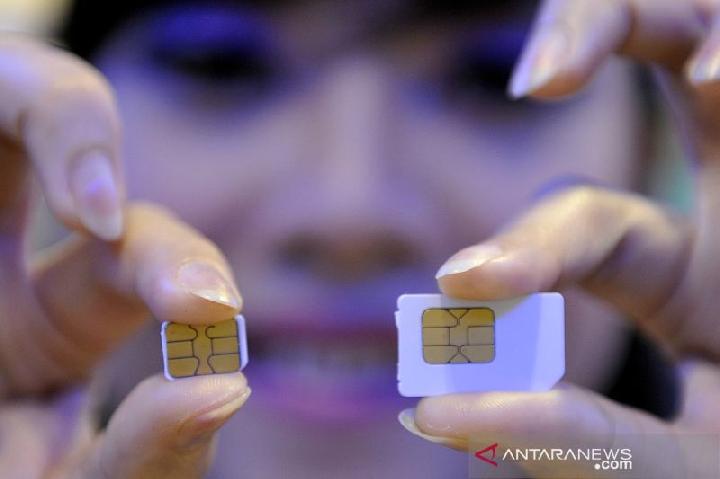
After obtaining a SIM card, consumers can activate the card and phone number through the mobile operator's application.
Indonesia's Biometric Registration for New Phone Number Starts July 1
8 hari lalu
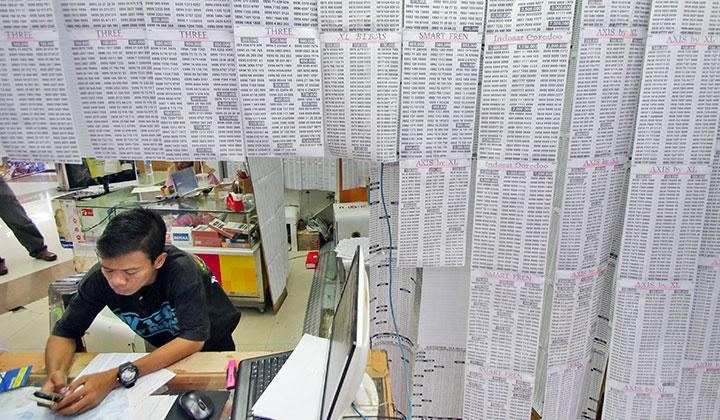
Komdigi claims the biometric registration policy is ready to be implemented based on the trial since January 2026.
Why Indonesia Is Limiting Mobile Phone Number Ownership
26 Januari 2026
The latest regulation restricts mobile phone ownership to prevent the circulation of active numbers without identity, which has become a loophole for cybercrimes.
Cybersecurity Expert Warns of Biometric SIM Registration Risks in Indonesia
28 November 2025
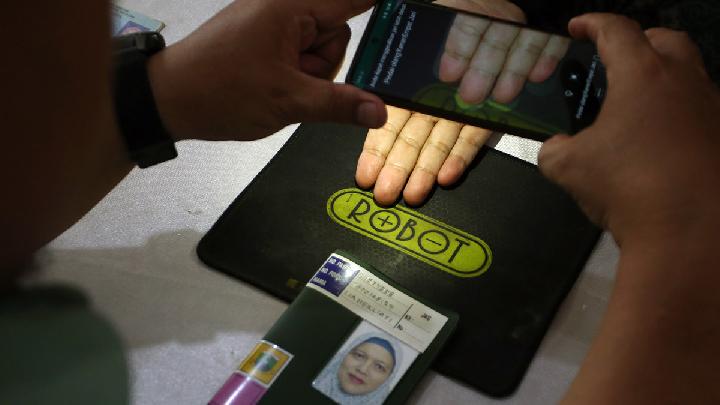
The expert warned if biometric data falls into the wrong hands, it could lead to identity fraud, unauthorized use of services, and privacy breaches.
Details of Indonesia's Plan to Mandate Facial Recognition for SIM Card Registration
25 November 2025

The Ministry of Communication and Digital is preparing a new regulation for SIM card registration that mandates face recognition biometric verification. When will it come into effect?
Indonesian Govt Considers Facial Scanning to Verify Social Media Users
19 September 2025

The Ministry of Communication and Digital Technology proposes implementing facial scanning to prevent the rise of anonymous social media accounts.
Indonesian Ministry Orders World App to Permanently Delete Citizens' Biometric Data
18 Juni 2025

The Indonesian Ministry of Communication and Digital (Komdigi) has ordered the World app to cease its data collection activities.
Tracing the Origins of Retina Scan Technology
13 Mei 2025

Retina scan is a biometric authentication technology to recognizes a person's identity based on the unique blood vessel pattern in the retina
Worldcoin Speaks Up on Controversial Retina Scans and Token Incentives
9 Mei 2025
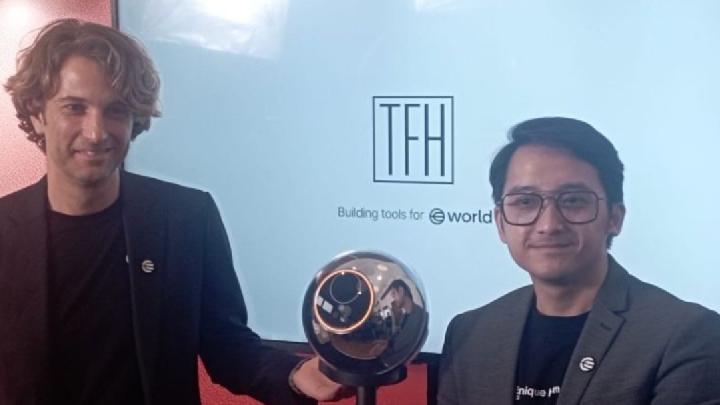
Worldcoin's developer, Tools For Humanity, explains about retina scans and token rewards
Academic Warns of 'Data Colonialism' Risk Behind Worldcoin's Retina Scans
7 Mei 2025
Worldcoin and WorldID have sparked debate for offering cash rewards for retina scans, a practice academic considers serious.























:strip_icc():format(jpeg)/kly-media-production/medias/5544736/original/021119200_1775115709-gibran_promo_motor_-_klaim.jpg)
:strip_icc():format(jpeg)/kly-media-production/medias/5378584/original/033747300_1760257934-unnamed__52_.jpg)
:strip_icc():format(jpeg)/kly-media-production/medias/3187033/original/003171100_1595400533-makkah-kaaba-hajj-muslims_21730-6508.jpg)

:strip_icc():format(jpeg)/kly-media-production/medias/5534796/original/005967200_1773893358-unnamed__8_.jpg)

:strip_icc():format(jpeg)/kly-media-production/medias/5220347/original/094913800_1747281277-41961081_8976420.jpg)
:strip_icc():format(jpeg)/kly-media-production/medias/5327298/original/085035000_1756177391-Cek_Fakta_Tidak_Benar_Ini_Link_Pendaftaran__83_.jpg)
:strip_icc():format(jpeg)/kly-media-production/medias/5558454/original/058152900_1776419419-cek_fakta_-_petani_milenial_2026.jpg)
:strip_icc():format(jpeg)/kly-media-production/medias/5552530/original/095418000_1775812020-Cek_Fakta_Tidak_Benar_Ini_Link_Pendaftaran_-_2026-04-10T153121.431.jpg)
:strip_icc():format(jpeg)/kly-media-production/medias/5534795/original/014528000_1773892938-khutbah.jpg)
:strip_icc():format(jpeg)/kly-media-production/medias/5525508/original/081861200_1773044157-Cek_Fakta_Tidak_Benar_Ini_Link_Pendaftaran_-_2026-03-09T144908.955.jpg)

:strip_icc():format(jpeg)/kly-media-production/medias/5547119/original/085428000_1775445943-Cek_Fakta_Tidak_Benar_Ini_Link_Pendaftaran_-_2026-04-06T101438.375.jpg)