

The government must optimize new blocks to boost oil and gas lifting. The incentive packages and production-sharing schemes are not attractive enough.
THE discovery of massive gas reserves in the Ganal Block, offshore the Kutai Basin in East Kalimantan, should be a breath of fresh air for the national energy supply. Reforming the production-sharing contract system remains the key to ensuring that this massive gas potential does not merely remain a figure on the reserve books without making a tangible contribution to state revenue.
The block, with reserves of 5 trillion cubic feet of gas and 300 million barrels of condensate, is touted as the largest discovery in recent years amid a trend of declining oil and natural gas production. In the 2026 State Budget, the oil and gas lifting target is set at 1.594 million barrels of oil equivalent per day (BOEPD). Last year’s actual production stalled at 1.56 million BOEPD, falling short of the 1.61 million BOEPD target. This situation is exacerbated by the decline in gas lifting to 951,800 BOEPD, well below the target of 1.005 million BOEPD.
The government must not get carried away by the euphoria of discovering new gas reserves. Especially since the fundamental problem in the upstream oil and gas sector lies in the ineffectiveness of the production-sharing contract scheme, which has long been a source of investor complaints. According to data from the Indonesian Petroleum Association, as of October 2025, realized upstream oil and gas investment has only reached US$11.2 billion, below the US$16.1 billion target. Exploration investment stands at just US$500 million, which also falls short of the US$1.5 billion target. These gaps help explain why national oil and gas production continues to be sluggish.
A comprehensive evaluation of the oil and gas production-sharing scheme is long overdue. For more than five decades, since 1966, Indonesia has relied on the cost-recovery scheme. Through this mechanism, contractors can claim reimbursement for exploration and development expenses once a field begins production. The system has proved successful in attracting major oil and gas companies to Indonesia.
However, past success does not mean the system is flawless. The cost-recovery scheme is often criticized for opening the doors to inflated costs, lengthy verification processes, and protracted audit disputes. Various studies indicate that this scheme is suitable for high-risk fields because it makes projects more economically viable. However, the state must bear significant oversight costs. The main issue lies not in the concept itself, but in governance and oversight, which are often weak.
When the gross split was introduced in 2017, this new scheme was expected to drive efficiency, simplify administration, and provide certainty regarding state revenue. In reality, in oil and gas fields with high geological risks, many contractors still consider cost recovery to be more investor-friendly.
Amid intense international competition to attract investors in the oil and gas sector, the government must continue to explore alternative scenarios to make Indonesia more competitive. One scheme worth examining is the tax-and-royalty model. Under this scheme, investors manage production, while the state collects royalties based on volume and taxes on profits without bearing operational costs or initial risks. However, this relatively simpler and less contentious cost-sharing scheme requires strong tax administration and law enforcement institutions.
In essence, every production-sharing contract option requires a transparent, consistent, and strictly monitored design. Without that, no scheme can guarantee the sustainability of investment and the optimization of state revenue. A comprehensive evaluation is increasingly urgent because the stakes are high: Indonesia’s dependence on oil and natural gas is growing day by day.
Indonesia's Purbaya Projects 5.4% Economic Growth in 2026
5 hari lalu
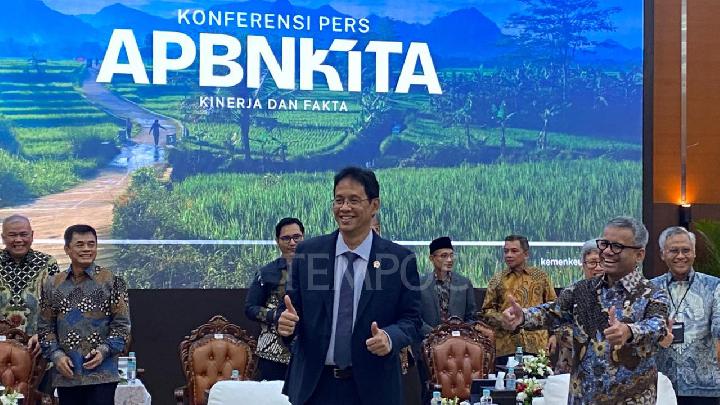
As of the first quarter of 2026, economic growth was recorded at 5.61%, higher than last year's growth of 5.11% year-on-year.
Why Indonesian Oil and Gas Imports See 82.52% Hike in April 2026
8 hari lalu
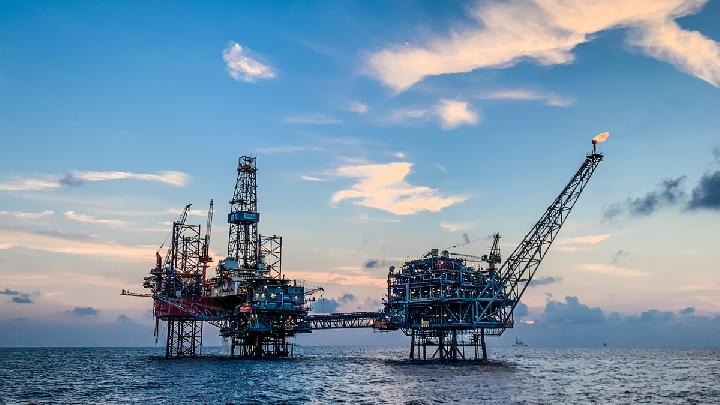
The import of oil and gas in April 2026 has surged by 82.52 percent compared to April last year. The total value of oil and gas imports in April was recorded at US$4.59 billion.
Russian Firm to Resume Indonesia's Tuna Block Project in June
26 hari lalu

The Tuna Block project was delayed after Harbour Energy, through its subsidiary Premier Oil, withdrew from the project.
Pertamina Hulu Indonesia Exceeds Oil and Gas Output Targets in Q1
45 hari lalu
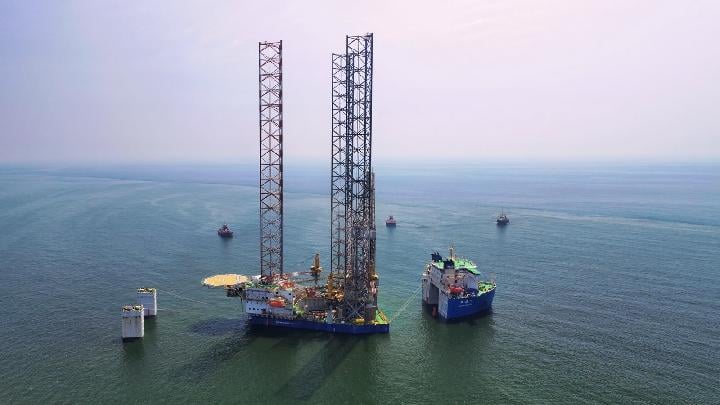
Indonesia's state-owned oil company Pertamina recorded an oil and gas production performance above target throughout the first quarter of 2026.
Indonesia Announces Major Oil and Gas Discovery in Ganal Block
51 hari lalu
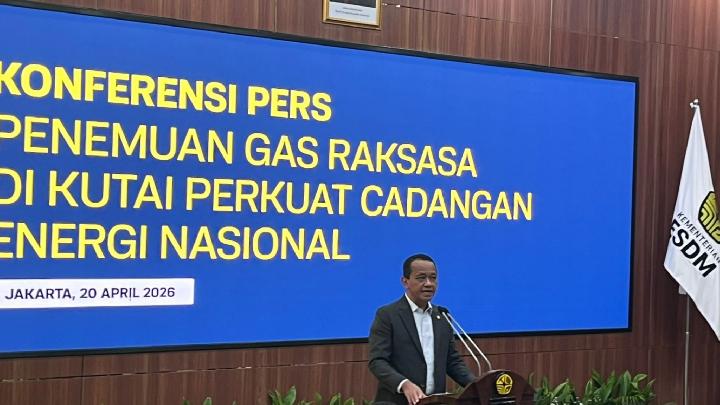
The Ministry of Energy and Mineral Resources (ESDM) estimates the potential of the gas reserves to reach around 5 trillion cubic feet (Tcf) and 300 million barrels of condensate.
Bahlil: Indonesia's LPG Supply Remains Secure Despite Price Hike
51 hari lalu

Minister Bahlil also confirmed that there will be no price increase for 3-kilogram subsidized LPG.
Pertamina Hikes Non-Subsidized Fuel Prices Starting April 18
54 hari lalu

The updated fuel prices can be accessed through the MyPertamina application.
Indonesia Has Enough Funds to Withstand US$100 Oil, Says Purbaya
6 April 2026
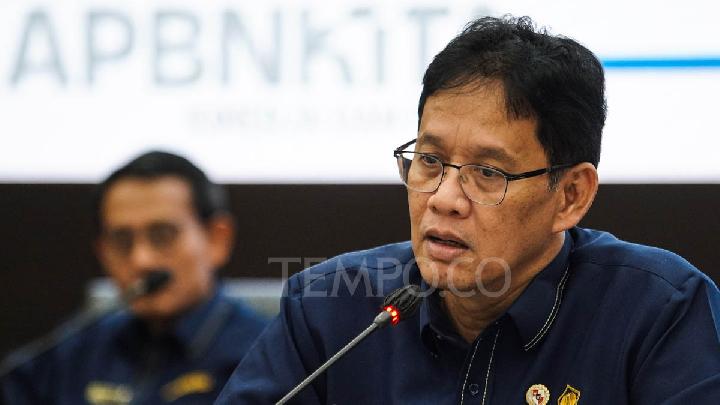
Finance Minister Purbaya Yudhi Sadewa said Indonesia will keep subsidized fuel prices unchanged until end-2026 despite rising oil prices.
As Iran War Rages, Europe Gears up for Energy Crisis
3 April 2026
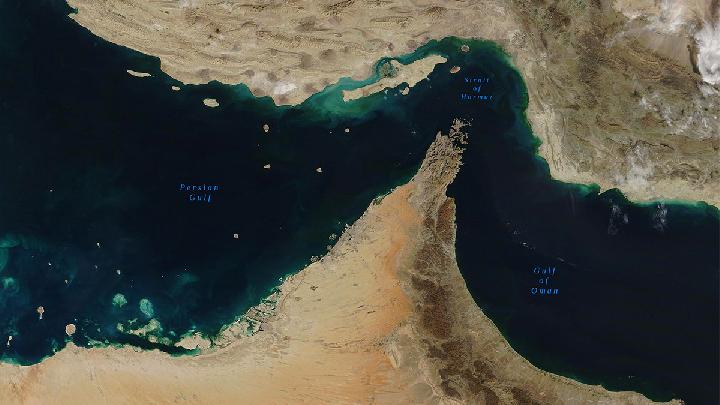
The EU is waking up to an energy crisis and asking people to reduce energy consumption, as fears of a supply crunch set in.
Indonesia, Japan Speed Up Masela Gas Project Amid Global Tensions
30 Maret 2026

SKK Migas said discussions on the progress of the Masela Block development have been proceeding well and continue to show steady advancement.





















:strip_icc():format(jpeg)/kly-media-production/medias/5531528/original/007916600_1773619112-unnamed__10_.jpg)

:strip_icc():format(jpeg)/kly-media-production/medias/5544736/original/021119200_1775115709-gibran_promo_motor_-_klaim.jpg)
:strip_icc():format(jpeg)/kly-media-production/medias/4403008/original/008750000_1681991372-20230420-Pemantauan-Hilal-Iqbal-7.jpg)
:strip_icc():format(jpeg)/kly-media-production/medias/4067423/original/029499900_1656490392-WhatsApp_Image_2022-06-29_at_2.40.46_PM.jpeg)

:strip_icc():format(jpeg)/kly-media-production/medias/5378584/original/033747300_1760257934-unnamed__52_.jpg)
:strip_icc():format(jpeg)/kly-media-production/medias/5541900/original/045765100_1774924667-f74d8bed-bd18-437b-b58c-048c5cf9b3f9.jpg)
:strip_icc():format(jpeg)/kly-media-production/medias/4990690/original/039762200_1730716919-cara-bayar-fidyah-puasa.jpg)
:strip_icc():format(jpeg)/kly-media-production/medias/3141446/original/078371000_1591071405-15263.jpg)